
Considering AI in your collection policy: A practical framework for libraries

AI is shaking up publishing, and staff at Salt Lake County Library shared their proactive approach in a recent WebJunction webinar. A team from the library shared their journey of intentionally considering adapting their collection policy to address AI-generated materials. The lessons they learned are applicable to libraries navigating today’s publishing environment, and this article highlights key points from the webinar.
The main takeaway: libraries cannot ignore AI-generated content. Instead, they must engage with it intentionally. By grounding decisions in mission, prioritizing transparency and quality, and remaining flexible as technology evolves, libraries can continue to provide trusted access to information while adapting to a rapidly changing publishing landscape.
Why the public needs to know about AI
AI-generated content now includes books written entirely by AI, partially AI-generated works (such as illustrations or text), AI-narrated audiobooks, and AI-translated titles. While these materials can offer benefits—including filling gaps in collections, enabling new creative expressions, and increasing access through translations—they also come with challenges. Key concerns include false or misleading information, low-quality content, lack of originality, and biases that AI may inherit from its training data. Additionally, as AI continues to improve, it may become harder to detect AI-generated content.
In response, the team from Salt Lake County revisited the library’s mission and vision and grounded the work there. They then formed a work group to address key questions:
- Should their collection management policy change to address AI-generated materials?
- Should they create specific guidelines for selecting these materials?
- Do librarians need training to make informed decisions about AI content?
After intentional consideration and stakeholder input, they decided the answer to all these questions was yes. The library updated its policy, created guidelines, and developed training to ensure thoughtful and consistent decision-making.
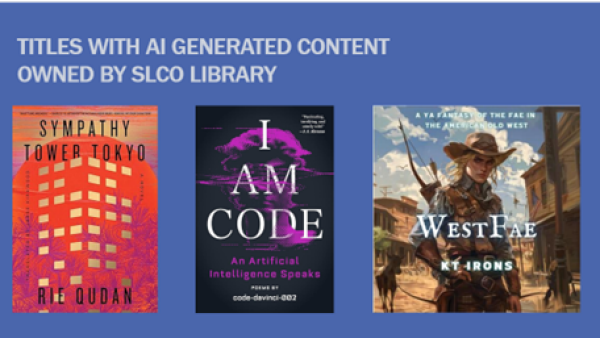
In the webinar, presenters shared examples of how they evaluate AI-generated materials. For instance, they would consider purchasing an AI-narrated audiobook if no human-narrated version exists and the content meets their selection criteria. They would also consider experimental works where AI is part of the story or process, as well as AI-translated books, provided the translations are high-quality and human-verified. However, they are less likely to purchase low-quality materials, books with egregious errors, or AI-generated works that lack transparency about how AI was used.
Transparency and quality are key factors in their decision-making. They prefer materials that disclose the use of AI and meet the library’s standards for accuracy and relevance. Staff training has been essential to help librarians feel confident in evaluating AI-generated content. However, the process hasn’t been without challenges—training has been delayed due to concerns about tone and content. Staff opinions on AI vary widely, with some strongly opposing AI-generated materials and others seeing them as no different from human-created works. The presenters emphasized the importance of balancing professional standards with personal beliefs and adapting policies as the AI landscape evolves.
Ultimately, the Salt Lake County Library team encourages libraries to be intentional about their approach to AI-generated materials—by staying informed, listening to feedback, and prioritizing quality, libraries can make thoughtful decisions that align with their mission to provide access to information and inspire curiosity.
Visit the webinar recording for more resources
Watch the full recording and find a list of practical resources to support your AI material collection policy development.