
Think smart with your community to transform small spaces
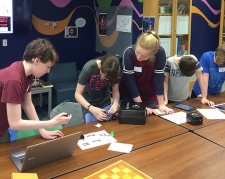
Communities rely on their libraries to offer dynamic spaces that can meet their needs. But in a small library, space can be at a premium. Enter design thinking. Design thinking is an iterative, people-centered mindset that helps solve everyday challenges by approaching them from a fresh perspective. It can be a meaningful way to engage the community in solving a problem, including making decisions about space. What does that look like in practice?
Creating a dot board at the local high school to ask about what kind of space you would like at the library. Visiting the local farmers market to talk about what folks are hoping the library can offer. Using Legos to build prototypes and then asking the community for feedback. These are all examples of different tools libraries have used in their journeys to create smart spaces.
What's a smart library space?
Smart library spaces are designed to meet the needs and desires of diverse communities. Smart spaces are where discovery and community intersect, fostering social connection among people of all ages by providing active learning that encourages exploration and play. Libraries that participated in WebJunction’s Small Libraries Create Smart Spaces project used placemaking and design-thinking strategies to support libraries through a process that transformed their existing spaces in cost-effective ways and reimagined their relationship with their communities.
The “Smart spaces are community places” webinar shares some of the practices and tools that participating libraries used to deeply listen to their communities and then turn ideas into reality.
Discovery and experimentation as guiding principles
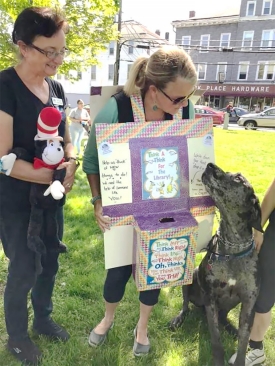
Two values woven throughout this approach are discovery and experimentation. In the webinar, presenters share a variety of innovative tools to help discover who your community is and what is important to them. One participant noted,
“Through the discovery process, I was able to tap into difficult to express needs. I learned a lot about what patrons want. For a public library dedicated to education and recreation, especially in a poor community in which many times wants are very much forgotten because there is only enough time for the needs, I think the wants are really critical to surface.”
Powerful discovery can occur with a commitment to show up in different places and really listen. The new tools support those conversations.
Phase one: Ideation and experimentation
The webinar presenters highlighted the value of experimentation through ideation, where community members imagine a world of possibilities for services and programs. Ideation requires slowing down and not rushing to solutions. Instead, look at all the community input—a useful exercise is to start with the idea that seems furthest from what the library could fulfill. In the webinar, the example shared was that the community wanted a swimming pool. The library was not going to build a swimming pool, but instead they considered suggestions from different angles. What is the need underneath the need? Was the pool desired for its social benefits? Being outdoors? Providing physical activity? Was it something cultural or historical about a swimming pool? Ideation requires dissecting the pieces and then figuring out what the library can do to support that need. In this phase, encourage wild ideas and then pick one to three that are feasible.
Phase two: Prototyping
Prototyping follows ideation, and in this phase, you make the one to three ideas into a tangible model and test assumptions. This can involve very humble materials such as cardboard, colored paper, and toilet paper rolls. Prototyping avoids costly mistakes such as realizing one of the dream furniture pieces would not fit in the space. Use the prototype to further engage the community. One participant described, “I was most excited about the buy-in from the community. Initially, there was a definite lack of understanding about what we were trying to accomplish until people came in and saw the prototype and had one-on-one conversations then they really got excited.”
This webinar highlighted a rich collection of tools and resources to engage with your community, particularly around the library’s space. The Transformation Stories capture powerful changes as libraries activated their spaces and re-engaged with the community.
For further learning
- Transformation Stories: Each library in the Small Libraries Create Smart Spaces project created space and programming aligned with the unique nature and needs of their community. These stories capture the trajectory of each transformation in pictures and words, showing the process before, during and after implementation of the Smart Spaces process.
- Smart Space Videos: These brief (1-2 minutes) videos show the highlights of a selection of Smart Space libraries.
- Making Space for Active Learning Course: This self-paced learning experience will guide you through the process of rethinking and reconfiguring physical space to make room for active learning and work with your community to create new services and programs.
- Toolkit for Creating Smart Spaces: WebJunction has created a toolkit using many of the project resources and stories, to help you re-envision your library’s place as a center of community learning.
Subscribe
 Sign up to receive Crossroads, WebJunction's newsletter for library learning.