Bridgebuilding Case Study: Shawano County Library
This case study was developed by IREX as an example of a "bridgebuilding" activity. Bridgebuilding, or bridging, is when different types of people come together with respect and understanding. It helps build trust and work towards shared goals. Over time, it can strengthen communities and create a more welcoming, connected society.
Background
Shawano County Library serves over 40,000 people in northeastern Wisconsin. It has six locations spread across rural Shawano County. The main branch sits in the city of Shawano, a small community of around 10,000 people. Like many communities, Shawano’s residents want to connect more but don’t always know how. This is particularly true for the elderly population and those recently released from the local jail. The community is also politically divided, and some residents have told library staff they fear sharing their beliefs in public.
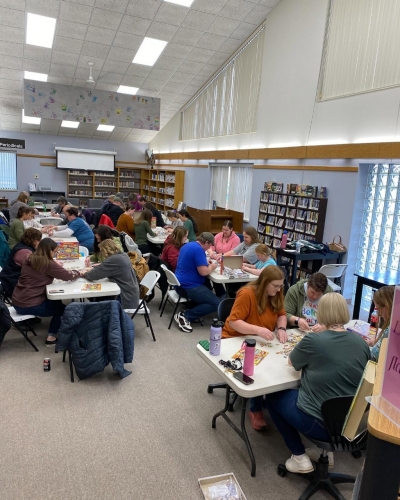
Shawano County Library offers a variety of innovative programs to serve community needs and interests. Library Assistant Claire O’Brien handles adult programming and runs the library’s popular bimonthly escape rooms. She describes the library culture as one that empowers staff to follow their interests by turning them into programs. A year before this project, the library started a Little Food Pantry in partnership with a local shelter and food bank. It met a clear community need and brought people together in a welcoming space. The library also hosts a yearly Winter Community Read program with discussions centered on books that explore social justice, equity, diversity, and inclusion.
“People want community, but don’t really know how to make that happen,” O’Brien explains. “The idea that libraries can help fill that need is something that's really interesting to me and something that I was really excited to try to help facilitate for our patrons and then also just to have patrons more connected to their library and understand that we're here for more than just checking out books and can help in other aspects of their lives as well.”
What the library was exploring
With a grant from IREX, Shawano County Library launched a reimagined community read program. It grew from a winter-only event into a year-long series. Now it includes discussions, activities, and programming focused on a shared environmental theme. The library selected four books covering birding, light pollution, wildfires, and native plant gardening, each offering a different lens on the relationship between people and the natural world.
The library wanted to test if promoting activities as a community-building series rather than standalone events would generate greater buy-in from residents. They also aimed to reach new people through social media and in local newspaper ads. The library also recognized a lack of age-inclusive opportunities in their community. Most programs cater to adults or children only, and most programs attract older participants overall. Says O’Brien, “That was part of something that we wanted to focus on with this community read series of programming is…we wanted to have programs that were family friendly, that were open to any age group. That's not something that our library does a ton of, of having programs that are for the entire family.”
Results
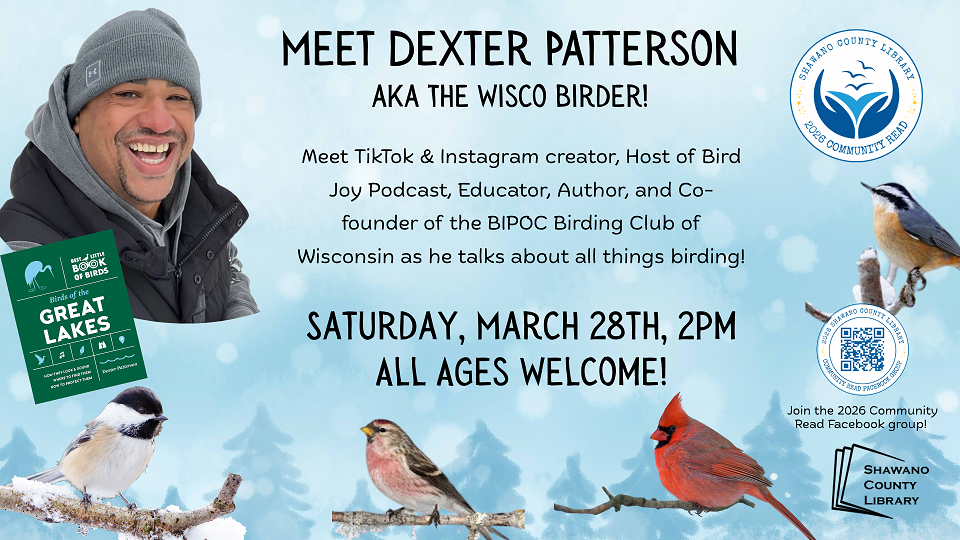
Many of the events under the community read program were very successful. One breakout success was an event with a popular TikTok birder who led a discussion and outdoor birding experience. The event drew a large number of attendees who had never participated in a library program before. Participants were so enthusiastic that they asked the library afterwards: “Can you please organize more events like this? We want to meet with other people who have this interest.”
O’Brien says that the community read program makes people “more curious about experiences outside of their own.” Patrons came back to the library saying things like, “This was amazing to me, and I never thought of this” and “I can’t believe that still happens today.” Reading about experiences very different from their own, connected through something universally relatable like nature, made participants see that their experience of the world is not the only one.
The program also successfully attracted a more intergenerational audience than typical. The events brought in more participants in the 18-30 age range than normal, as well as some families. One family with teenagers attended multiple programs across both rounds. Their survey responses showed that after attending these programs they felt safer, more welcome, and more listened to. The family now visits the library more frequently and is more likely to say hello to staff. The library also hosted a call with a NASA scientist about the night sky, which attracted families with younger children alongside older adults. When younger children became restless during the presentation, staff offered alternative activities nearby, such as coloring and hands-on projects. This meant families could stay instead of leaving.
By the second half of the series, far more participants interacted with strangers. This shows the value of the community read program’s longer format. Many attendees connected with someone new, even if it was just through a brief conversation. Before the events, 48% of participants strongly agreed that they felt others tried to understand their point of view at the library; by the end of the events, that rose to 61%. 72% felt welcome and included at the library before the events compared with 78% after.
Key learnings
Social media promotion outperformed newspaper advertising. The library learned that social media was significantly more effective at reaching new audiences. It helped turn awareness into attendance. Newspaper advertising did not produce the same results. This allowed the library to redirect limited time and resources toward the channels that worked.
People crave community and respond when you provide it. The library suspected that residents wanted more connections but had never asked. The surveys confirmed it. “Just knowing that people really do want and crave that community…It was exciting to have that response from attendees…of them asking us, ‘can we please have more things like this? We really enjoyed this.’ We were pretty sure that people wanted these things, but unless you ask them directly, you don't necessarily know. So, to be able to have this way of directly asking them with this survey was validating,” says O’Brien
In-person engagement matters more than online discussion. The library tested a Facebook group to keep conversations going between events. They used take-and-make programs that people could do at home. It did not generate the hoped-for discussion. The library learned that in-person connection is what resonates in their community. They plan to focus less on online engagement and more toward in-person programming.
Staff passion drives successful programming. The birding program succeeded largely because the librarians were passionate about it. As library staff notes, “If you’re interested in it, somebody else is too. And to just try to find those people and bring them together is exciting.” A library culture that empowers staff to follow their interests produces more creative, resonant programming.
Expanding the timeframe enables connections to build over multiple programs. Extending the community read program from a winter-only activity to a full-year program gave participants time to build familiarity with each other across multiple events.
Why it matters
Participating in this work fundamentally shifted how the library thinks about its programming. The library staff describes a new awareness that trust and community building are part of everything the library does. This awareness helps them be intentional about strengthening those elements rather than leaving them to chance.
“It doesn’t have to be a big, difficult, intimidating thing,” O’Brien says. “It’s a little tweaking. It’s a little bit of a rephrase. It’s trying to draw this person into something you’re already doing. And it can make a difference even if it’s just a small change.”
As one example of such a change, the library, inspired by an example shared by another library in the community of practice to start hosting a new true crime club outside of the library at a local bar to increase participation.
The trust indicators revealed something the library had not fully considered: that presence is not the same as belonging. Seeing that some attendees did not feel fully welcome even though they had shown up pushed the library to pay closer attention to the experience of being at a program, not just the act of attending one. Watching those same participants’ trust scores to rise over subsequent events confirmed that this attention matters. O’Brien also noted that it has led to a shift in perspective for her; when she hosts programs now it’s always in the back of her mind to pay attention to the conversations patrons are having with each other and the mix of patrons that are there to try to intentionally ensure bridge building is taking place.
The experience also brought a culture of measurement to the library. Inspired by the survey process, staff have created surveys for the escape room, the bookmobile, and other programs. “To just be able to serve our community in a way that meets their needs from their own words,” O’Brien explains that this is a shift from assuming the library knows what patrons want to directly ask them what they want.
Library details
- Library name: Shawano County Library
- City, State: Shawano, WI
- Size of library system: County library system with six locations serving over 40,000 people across Shawano County
- Contact for bridging work: Claire O'Brien, Library Assistant, [email protected]
Use this case study to learn:
- how a community read program can introduce diverse perspectives in communities with limited demographic diversity
- about selecting themes that walk the line between comfortable and challenging in politically divided communities
- how to design intergenerational programming that welcomes families and all age groups together
- about reaching new audiences through social media promotion in small, rural communities
- how to use trust indicators to recognize that attendance does not equal belonging
- about restructuring programs from lecture-style formats to small-group conversations that foster genuine connection
This resource was created by IREX through a project made possible with support from More Perfect,
Rockefeller Philanthropy Advisors, and the Walmart Foundation.