Bridgebuilding Case Study: North Liberty Library
This case study was developed by IREX as an example of a "bridgebuilding" activity. Bridgebuilding, or bridging, is when different types of people come together with respect and understanding. It helps build trust and work towards shared goals. Over time, it can strengthen communities and create a more welcoming, connected society.
Background
North Liberty, Iowa is a rapidly growing community with high rates of population turnover and limited civic infrastructure. With no local newspaper or chamber of commerce, many residents struggle to find ways to connect with one another and get involved in local life.
North Liberty Library has stepped into this gap as a trusted community connector. Its adult services staff have made bridge building a primary focus and, building connections between different people a top priority. Before this project, the library was already hosting many bridging programs, including a Good Neighbor community group whose participants now socialize and volunteer together outside of library events.
North Liberty Library’s weekly 55+ Connections Lunch works to build connections between seniors through a social hour and lunch that often includes guest speakers or an activity. The group consistently brings 35-40 participants, reaching the room's capacity. Participants have built strong connections with one another; they celebrate each other’s birthdays, attend external events as a group, and play cards after the meal. The library has also expanded the event to regular weekly library programs and outreach programming to a low-income senior housing facility, which did not previously have any social programming.
North Liberty Library has stepped up to help bring people together, making it a top priority for their adult services staff. They already offer several programs that help people make friends, like the Good Neighbors group, where members now hang out and volunteer together even when the library isn’t hosting an event. They also run a weekly 55+ Connections Lunch, where about 35–40 older adults come to eat together, listen to guest speakers, and build strong friendships. The library even expanded this lunch program to a nearby low‑income senior housing building that didn’t have any social activities before.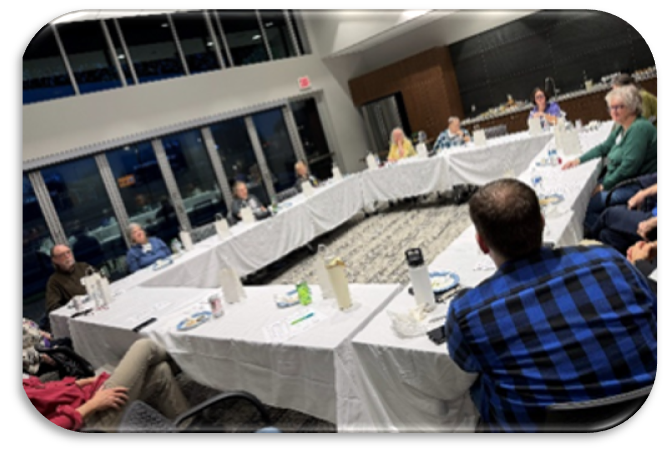 Photo Credit: North Liberty Library
What the library was exploring
North Liberty Library’s staff were interested in learning how they could strengthen their work to foster connection across difference and measure the impact of their work. Through participation in IREX’s Building Community Trust through Libraries initiative, North Liberty Library piloted Good Neighbor Discussion Dinners: facilitated community gatherings to discuss how to better welcome newcomers to the community over meals, testing a new approach to building social connection.
Rather than centering the program on persuasion or information transferring to persuade or lecture, the library focused on creating clear expectations, simple structures, and a welcoming atmosphere that would support participation from people with different perspectives.
Since the dinner format was effective, in the second round, the library kept the format the same but tested two different approaches to facilitated conversations. This helped them see which approach impacted participants’ sense of connection and belonging. One dinner was information-based, providing participants with curated resources about artificial intelligence (AI) as the foundation for discussion. The other dinner took the opposite approach, centering entirely on personal storytelling and exploring the role of sharing lived experiences when navigating difficult conversations.
Results
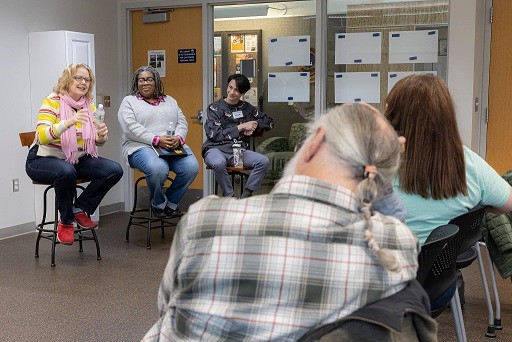
Across all four dinners, the library reached a total of 59 participants. Many people came back for more than one dinner, showing that they were getting real value from the experience. Participants were actively engaging with each other and reported feeling very comfortable joining in the conversations. Thanks to the library's skilled facilitation, participants approached topics with curiosity rather than defensiveness. As shown in table 1 below, the first two dinners consistently led to positive changes in how participants felt about welcoming newcomers, having difficult conversations, and understanding other people's points of view.
| Dinner 1 | Dinner 2 | |
| Felt more open to welcoming newcomers | 94% | 92% |
| Felt more confident having difficult conversations | 82% | 92% |
| Could explain someone else's viewpoint fairly (before) | 57% | 73% |
| Could explain someone's viewpoint fairly (after) | 100% | 80% |
The third and fourth dinners continued to be impactful. Only 21% of participants reported strongly agreeing that they could explain someone else’s viewpoint fairly before the dinners, compared with 41% after. Participants discussed difficult issues they had struggled to talk about in their personal lives, and many reported feeling relieved and connected as a result. As Adult Services Librarian Nick Shimmin noted, “People really felt like they were able to connect with others about these big things that they had been kind of holding in.” Participants expressed a desire to keep meeting beyond the library. One said, “This is a cool group of people! I’d like to spend time getting to know some of them further one-on-one.”
Says Shimmin, “One of the real successes for me is simply getting people from very different backgrounds and viewpoints into the same room and talking to each other. In our community, that doesn’t always happen naturally, but when it does, you can feel how meaningful it is.”
Key learnings
Organizing around a meal breaks the ice. Organizing the discussions around a meal was a successful format that helped break the ice between participants. Staff observed that participants responded most strongly not to the subject matter itself, but to the experience of being invited into a space that felt intentional, structured, and welcoming.
Connecting matters more than the discussion topic. Shimmin notes, “One of the things that I took away from it was maybe it doesn’t matter whether it’s information or personal story based, just the fact that we are actually getting people together to talk is the big thing.”
Experienced participants model positive behavior. After looking at their outreach data, North Liberty realized they need to continue reaching people they aren’t connecting with yet, such as immigrants. They also saw that they should make their current bridging work more visible so new participants feel encouraged to join.
Outreach must extend beyond existing networks. The participation of a city council member who shared candid frustrations about community engagement that he could not easily voice in a formal meeting illustrated the unique power of libraries as neutral spaces for honest conversation between residents and elected officials.
Don’t fear conflict; it rarely happens. Shimmin’s consistent advice to other libraries considering this type of programming is straightforward: the fear of conflict is almost always unfounded. “The tendency is to worry that there will be conflict or that people won’t enjoy it, which is the opposite of what happens. People are just really looking to be able to connect with one another.” This reassurance, grounded in Shimmin’s 2.5 years of experience without a single serious argument, can encourage more libraries to take the leap.
Why it matters
These experiments affirmed for North Liberty Library that their approach is effective. They are considering testing the trust indicators in some of their long-term programs to learn more about participants’ experiences and whether they are building strong connections with one another. They are also continuing to think of new ideas to increase the visibility of their bridging work and engage new members of the community, such as having a “welcome to North Liberty” tent at local festivals and improving their online presence.
This fall, North Liberty Library plans to launch a new program series tentatively called “Talking Tough Topics” designed to give community members structured practice in discussing difficult issues. The series is a direct offshoot of the Discussion Dinners and reflects the library’s learning that people benefit enormously from simply having a safe space to be heard.
Library details
- Library name: North Liberty Library
- City, State: North Liberty, IA
- Size of library system: Single-branch public library serving a rapidly growing community of approximately 20,000 residents
- Contact for bridging work: Nick Shimmin, Adult Services Librarian,
Use this case study to learn:
- how Good Neighbor Discussion Dinners can build social capital and welcome newcomers in communities with high population turnover
- about facilitating community conversations across different places with limited civic infrastructure
- how to compare information-based and storytelling-based discussion formats to deepen community engagement
- about using simple structures, intentional facilitation, and shared meals to lower the bar for participation
- how to build a base of regular participants who model respectful dialogue and welcome new attendees
- about advice for libraries hesitant to host conversations on difficult topics, especially when fearing conflict
This resource was created by IREX through a project made possible with support from More Perfect,
Rockefeller Philanthropy Advisors, and the Walmart Foundation.