Bridgebuilding Case Study: Newburgh Free Library
This case study was developed by IREX as an example of a "bridgebuilding" activity. Bridgebuilding, or bridging, is when different types of people come together with respect and understanding. It helps build trust and work towards shared goals. Over time, it can strengthen communities and create a more welcoming, connected society.
Background
Newburgh, New York, is a city of striking contrasts. Once a thriving industrial hub, it has become a microcosm of urban transformation, marked by rapid gentrification, economic disparity, shifting demographics, and growing isolation among seniors. On a single block in Newburgh, one might find a mansion next to Section 8 housing and immigrant families. Newburgh Free Library (NFL), whose mission statement is to “inform, inspire, and connect our diverse community,” saw the need to create opportunities for socioeconomic mixing between new and long-time residents. While the library organizes many programs that provide opportunities to mingle, they have never intentionally centered these programs around building strong relationships.
What the library was exploring
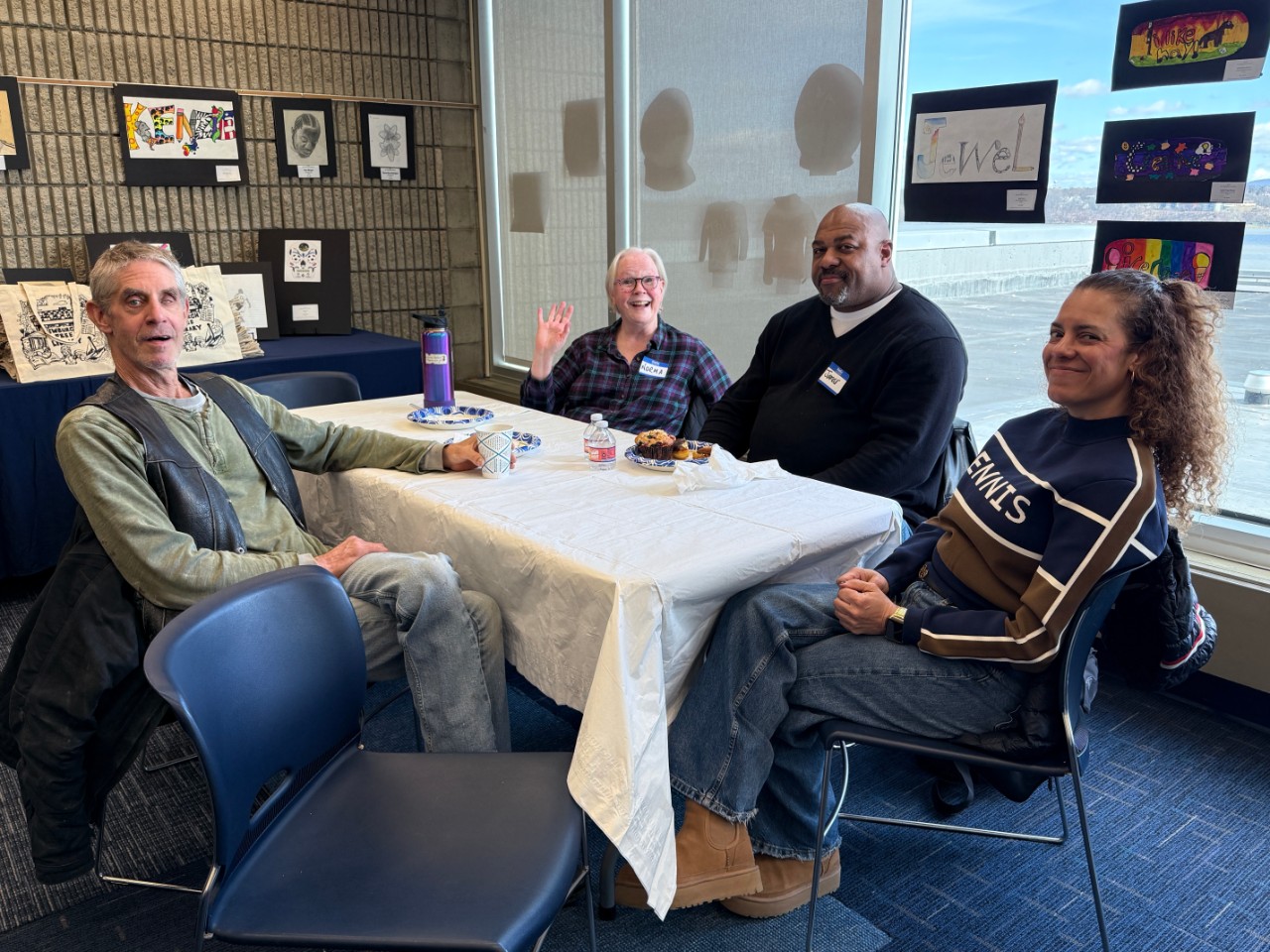
Through a grant from IREX, NFL launched a series of “Meet Your Neighbor” events. The goal was to help long-time residents and newer residents connect and build trust across economic and cultural divides. Yoly Avella, New Americans and Adult Literacy Librarian, noted that they were “hoping to learn how to design activities that enable deep bonding within a short period of time.”
Through these events, they tested different outreach and marketing approaches, including direct mailers, interactive facilitation techniques like scavenger hunts, and other trust-building exercises.
In the second round, the team made several changes based on their learnings. They stopped sending direct mailers since they had not brought in many attendees during the first round. They switched to email-based outreach, achieving the same attendance at a fraction of the cost. They also noticed that people enjoyed having open, unstructured time to talk to each other, so they cut back on formal parts of the agenda and gave people more time for free conversation.
Results
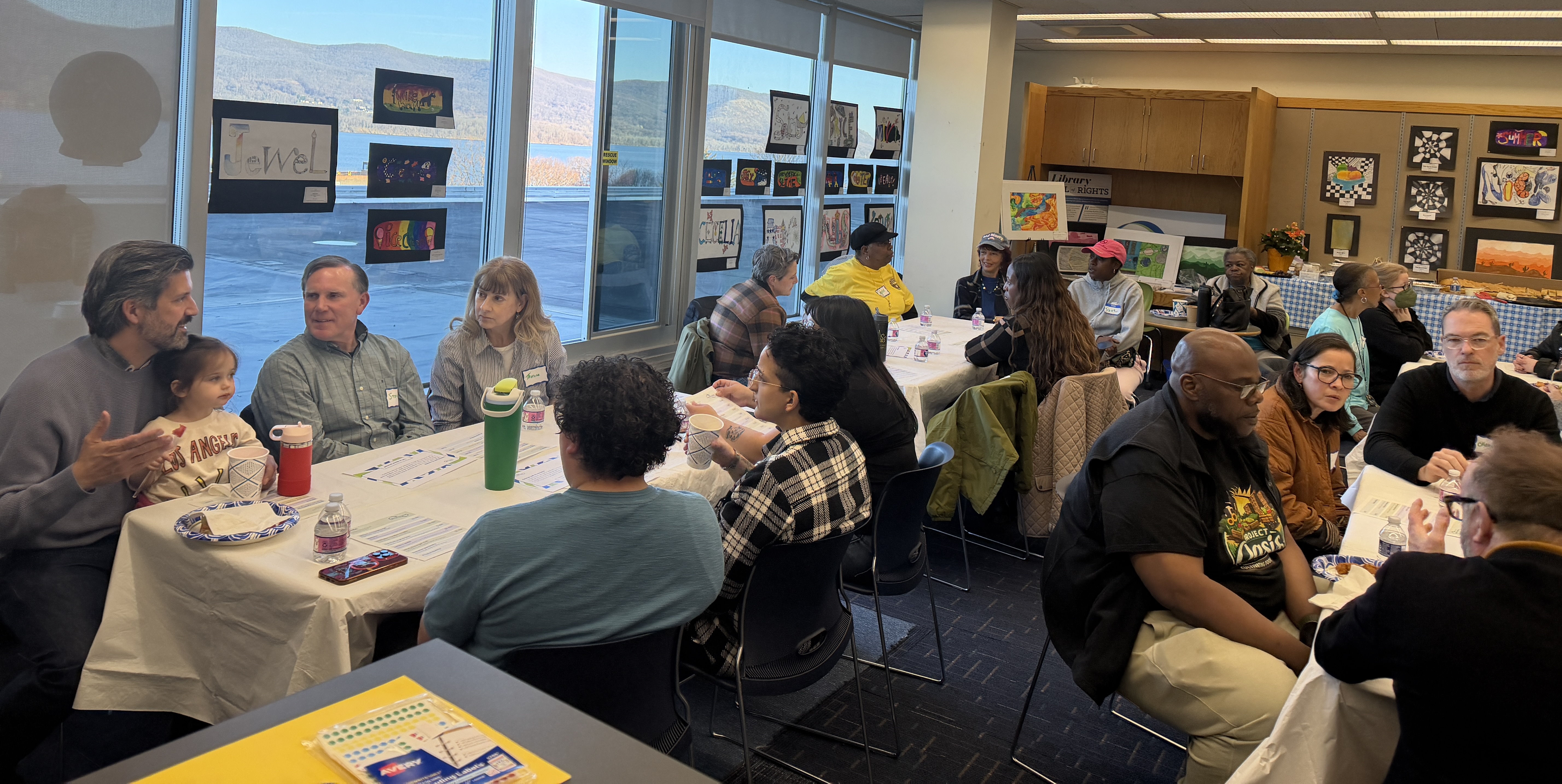
The Meet Your Neighbors events were hugely successful. Across all four events in both rounds, 115 people participated (58 in Round 1 and 57 in Round 2). In the first two events alone, 32% of attendees had lived in the community for less than two years. The library achieved its goal of socioeconomic mixing, with participant income levels ranging from people experiencing homelessness to people earning over $200k.
Participants were so engaged in the conversations that library staff struggled to interrupt them to transition to the next part of the event. Some people stayed to talk for over 90 minutes after the end of the event. Staff saw participants exchanging contact information and later heard that participants had stayed in touch and helped each other find community events.
Participants also reported feeling more connected and open-minded after attending:
| Round 1 (first 2 events) | Round 2 (final 2 events) | |
| Felt a sense of mutual respect | 85% | 92% |
| Willing to learn something that may change their views | 70% | 88% |
| Talked or worked with someone from a different background | 75% | 79% |
These events successfully inspired participants to become actively involved with the Library as follows:
- Strategic Planning: 50% to 75% of participants said they wanted to participate in a strategic planning session.
- Support Groups: One participant launched a meet-up group specifically for developmentally disabled young adults.
- Skill Sharing: A patron committed to teaching a sewing class for teens.
- Outreach Support: A participant volunteered to assist with Spanish-language outreach for upcoming events.
- Friends of the Library: Inspired by what they learned at the event, a participant has begun volunteering with the Friends of the Newburgh Free Library group.
The program’s reputation extended beyond the library’s own outreach. A participant named Carlos was referred to the event by Catholic Charities. He participated because he wanted to learn how to implement the Meet Your Neighbors model in his own library work and a spiritual group he helps lead, demonstrating that the approach is inspiring other community groups to replicate it.
Key learnings
- Direct outreach is far more effective than mailers. Direct outreach via phone calls or emails was much more impactful than mailers or social media. The first round’s mailer was sent to approximately 500 people but only yielded about 2 attendees. Switching to email with follow-ups via phone in Round 2 achieved the same attendance levels. The library recommends asking other staff members to help suggest very connected community members to invite who can help spread the word to others.
- Trust indicators identify areas for improvement. Using trust indicators helped the library identify elements of the events that could be improved. Only 58% of participants reported that they “felt others tried to understand my views.” In response, the library introduced new facilitation techniques in subsequent events to give participants the opportunity to practice deep listening. As a result, in the final two events 80% of participants agreed that they felt others had tried to understand their views.
- Demographic data reveals outreach gaps. Demographic survey questions and conversations with participants helped the library identify future outreach needs, specifically needing to increase participation from young people and men and organize an event for Spanish speakers.
- Give participants more time to connect. The most valued part of the events was unstructured conversation time. Adjusting the agenda to create more space for dialogue made events even more impactful. Says Elizabeth Vega-Lebron, Community Engagement Coordinator, “We saw people seeing each other, listening to each other, making connections, exchanging phone numbers, wanting to continue.”
- Build a “super connector” list. The team created a master spreadsheet of community members who are already active across different socioeconomic circles for people involved in arts, elderly care, faith communities, and civic organizations. They asked the staff to each suggest 10 people who should be invited. Starting with a solid list of connectors provides a foundation for outreach that grows with each event.
“It really sparked a genuine sense of belonging and happiness, which is not always easy to do with everyone. And that energy creates connection, you know, physiologically we connect with that and I think it’s powerful. It’s a tool that we can use to increase wellness in our community” - Vega-Lebron
“People are learning. They’re learning about the library and our resources. They’re learning about each other. We’re impacting loneliness, connecting people to others.” -Vega-Lebron
Why It matters
Organizing these events was incredibly inspiring for library staff and has led to a shift in their thinking about their programming. They noted: “I felt moments of euphoria…I kept getting chills,” and “it was one of the most fulfilling things we’ve ever done.”
The events also left a big impression on library staff who are not responsible for community engagement and helped them to understand why bridging is important. “Staff were really excited by the events and coming up with lots of ideas for the next ones. It's funny because sometimes over the years [community engagement staff] constantly are asked like ‘What do you guys do exactly?’ So to hear them feel like they're finally understanding it, that's really great. And the fact that they want to get involved, that's what we want,” says Avella. They’ve also been invited to present their learnings to their entire 46-library system.
The impact on library leadership has been significant. The library’s director asked to meet with the community engagement team and told them he “really loved what [they’ve] done.” He wants to use their approach throughout the entire library — including during the library's next strategic planning process, where they hope to hear from a much more diverse group of community members than in past years.
Building on the success of the Meet Your Neighbor events, Newburgh Free Library has ambitious plans to scale and deepen its community engagement work. The library has applied for funding to keep organizing these events six times a year. They want these gatherings to become a key part of their community building work and a helpful way to connect people with volunteer opportunities both in the community and at the library. The next planned event will be conducted entirely in Spanish in July. This responds directly to the demographic analysis that identified the need to increase participation from Spanish speakers. The library is also considering developing a network of “super connectors,” community members who already travel across different socioeconomic circles, and “library ambassadors,” regular users involved in other community initiatives to help spread the word about the events to groups they are connected with.
They also plan to try integrating bridging activities into all their other existing activities and are beginning by dedicating time at the start of all programming to welcome participants and give them some time to socialize and get to know each other and the library staff better.
Library details
- Library name: Newburgh Free Library
- City, State: Newburgh, NY
- Size of library system: Part of a 46-library system, serving a city of approximately 90,000 people with over 10,000 library card holders
- Contact for bridging work: Elizabeth Vega-Lebron, Community Engagement Coordinator [email protected]
This case study to learn:
- how Meet Your Neighbor events can connect long-time residents with newcomers and bridge socioeconomic divides
- tips on how to design programs that achieve true socioeconomic mixing
- how to use trust indicators to evaluate and improve community engagement programming
- how to identify outreach gaps through demographic survey questions
- how to scale community engagement work through super connectors, library ambassadors, and a Friends of the Library group
This resource was created by IREX through a project made possible with support from More Perfect,
Rockefeller Philanthropy Advisors, and the Walmart Foundation.