Bridgebuilding Case Study: District of Columbia Public Library
This case study was developed by IREX as an example of a "bridgebuilding" activity. Bridgebuilding, or bridging, is when different types of people come together with respect and understanding. It helps build trust and work towards shared goals. Over time, it can strengthen communities and create a more welcoming, connected society.
Background
Washington, DC, is a diverse urban center served by a library system of 26 neighborhood branches across the city. In late 2025, the community’s sense of security was strained, and many residents were feeling anxious and divided. DC Public Library (DCPL) recognized the library could play a critical role in bringing neighbors together during this tense time. DCPL was already preparing to launch a new strategic framework around three core pillars: joy, belonging, and resilience. These ideas reflect the library’s commitment to bring people together and make everyone feel welcome in the community.
DCPL has a history of civic engagement programs that center community voices. For example, the library has hosted “Coffee and Conversations” programs to explicitly invite people experiencing homelessness to participate and be in community with others. They've also run a “Common Ground” series featuring interactive theater to spark dialogue. These efforts laid important groundwork, but they were typically small in scale – an average of around 12 people would attend these programs. Library staff saw an opportunity to reach more people and build even stronger community trust through a fresh approach.
What the library was exploring
Through a grant from IREX, the library team decided to experiment with a community songwriting program as a means of civic engagement. Their idea was simple but untested: would a music-focused event draw a broader audience and foster deeper connections than a traditional event?
The four songwriting events, which were facilitated by local musicians and artists, invited residents to collectively write and record an original song about DC’s future. The team believed that using positive, hopeful messaging for the event’s marketing would motivate people to show up, and that promoting the event through library newsletters and direct outreach from branch staff would boost turnout.
Results
The forward-looking theme helped shift everyone’s focus on hope and inspiration for their city, rather than present-day tensions. DCPL organized workshops in each quadrant of DC to ensure citywide access. In each session, people gathered in a circle while the musicians started playing instruments and encouraged attendees to share words or ideas in response to the prompt. Every idea was welcome, whether someone spoke about affordable housing, safer streets, or more community events; the group would find a lyric or refrain to capture it.
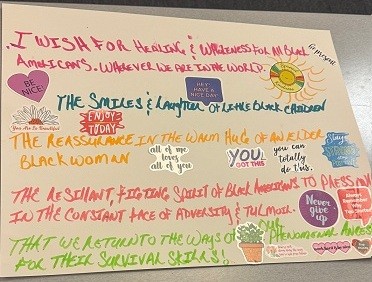
The intergenerational program made everyone feel comfortable participating at their own level. For courageous participants, there were microphones to sing or speak into. For the shy, there were tables with art supplies to draw visions of DC’s future or jot down lyrics quietly. Some came just to listen and enjoy live music. Adult participants appreciated the rare opportunity to take a break from their busy lives to decompress and express themselves through art. Library staff worked hard to create a friendly and welcoming atmosphere with snacks and coffee. “I think the fact that we provided snacks was kind of an equalizer,” said Civic Engagement Coordinator Diana Veiga. “People might have come for the food, but then they stayed and connected and talked to one another.”
These inclusive touches led to some delightful surprises. At one library, a regular patron who had been sitting quietly in the back suddenly pulled out a harmonica he had brought. As another attendee hesitated to sing solo, he encouraged her: “If you go sing, I’ll play my harmonica.” At another event, a person who had only come into the library to charge their phone ended up staying for the entire program once they heard the music and laughter coming from the meeting room.
In these moments, you could see barriers between strangers melting away. Children banged on drums and danced while adults penned lyrics. People who might never have met outside the library were now sharing a creative experience. One participant, smiling after a song, shared that the event had “uplifted” them during an otherwise difficult week. Another patron told staff that she wished there were “more programs like this for adults” in the community. 100% of survey respondents “strongly agreed” that during the program they felt a sense of belonging, showed respect to others from different backgrounds, and worked with others toward a shared goal.
The four events drew a total of 49 participants (6 people in northwest DC, 16 in southeast DC, 7 in southwest DC and 20 in northeast DC). The number of attendees at the events in southeast and northeast DC exceeded DCPL’s typical turnout for civic programs, suggesting that the music and hope formula can indeed attract more people. Library staff attributed the modest turnouts at the other two events to frigid, snowy days.
Key learnings
The power of personal outreach. Formal marketing (newsletters, social media) helped, but the most effective driver of attendance was word-of-mouth. Many people came because a librarian or friend personally invited them or announced the program in the library that day. This shows the value of using staff relationships and on-site promotions to spread the word. It also highlights the importance of making sure branch staff feel connected to the program and are enthusiastic about promoting it. Going forward, the team will involve branch staff more in spreading the word and allow more lead time for community outreach.
Meet people where they are (literally). The incident of someone joining to charge their phone taught the team to “trust the power of your program.” If you create an inviting space, people will be drawn in, even if accidentally. In practice, this means holding programs in visible, accessible library locations and being welcoming to anyone who shows up.
Let participants guide the experience. Library staff discovered the importance of not over-engineering on the agenda. The most memorable moments (like the harmonica duet) weren’t planned; they happened because the facilitators gave people agency to shape the event.
Creative expressions are a powerful connector. The workshops reaffirmed that arts and creativity can engage community members in ways traditional forums may not. Offering multiple forms of participation (music, art, conversation) allowed people with different personalities and comfort levels to join in.
The role of facilitators, particularly skilled musicians, was critical. Strong facilitators were able to encourage hesitant participants and sustain energy even when engagement was initially low. This highlights the importance of investing in facilitators who can adapt to group dynamics and guide inclusive participation.
Why it matters
While DCPL already has a strong portfolio of bridging activities, using the trust indicators gave them valuable learnings. By identifying goals like “increased sense of belonging” at the start, the library was able to plan the program more intentionally. This included small but important details like greeting every person who walked in, encouraging people to use first names, and setting ground rules for respectful listening. The positive survey results validated confirmed this approach and gave the library concrete data (and stories) to show their impact. “I think [the trust indicators] made a difference… It forced us to think about what we wanted to accomplish and how to get there,” reflected Veiga.
Going forward, they plan to share this experience with other staff members. They will add the indicators and outcome-focused planning into their program planning checklist for adult library staff. This will help staff design and evaluate activities that build trust and connect people across their differences. They are evaluating how to incorporate trust indicators into measuring progress under their new strategic framework. Library staff are also considering how to strengthen existing programs such as book clubs, Coffee and Conversation programs, and knitting clubs by adding practices that encourage deeper dialogue, belonging, and trust, rather than launching new initiatives.
Library details
- Library name: District of Columbia Public Library
- City, State: Washington, DC
- Size of library system:Urban library system serving Washington, DC, with 26 neighborhood branches across the city
- Contact for bridging work: Diana Veiga, Civic Engagement Coordinator, [email protected]
Use this case study to learn:
- how a community songwriting program can foster civic engagement and bring neighbors together during community tension
- creative, arts-based approaches to bridging social and economic divides in urban communities
- how to use forward-looking themes and hopeful messaging to shift conversations from tension to inspiration
- designing inclusive events that welcome multiple forms of participation, including music, art, and conversation
- how to leverage staff relationships and personal outreach to drive turnout for community programs
- integrating trust indicators and outcome-focused planning into program design and evaluation
This resource was created by IREX through a project made possible with support from More Perfect,
Rockefeller Philanthropy Advisors, and the Walmart Foundation.